Te Ao Tūroa by Haser
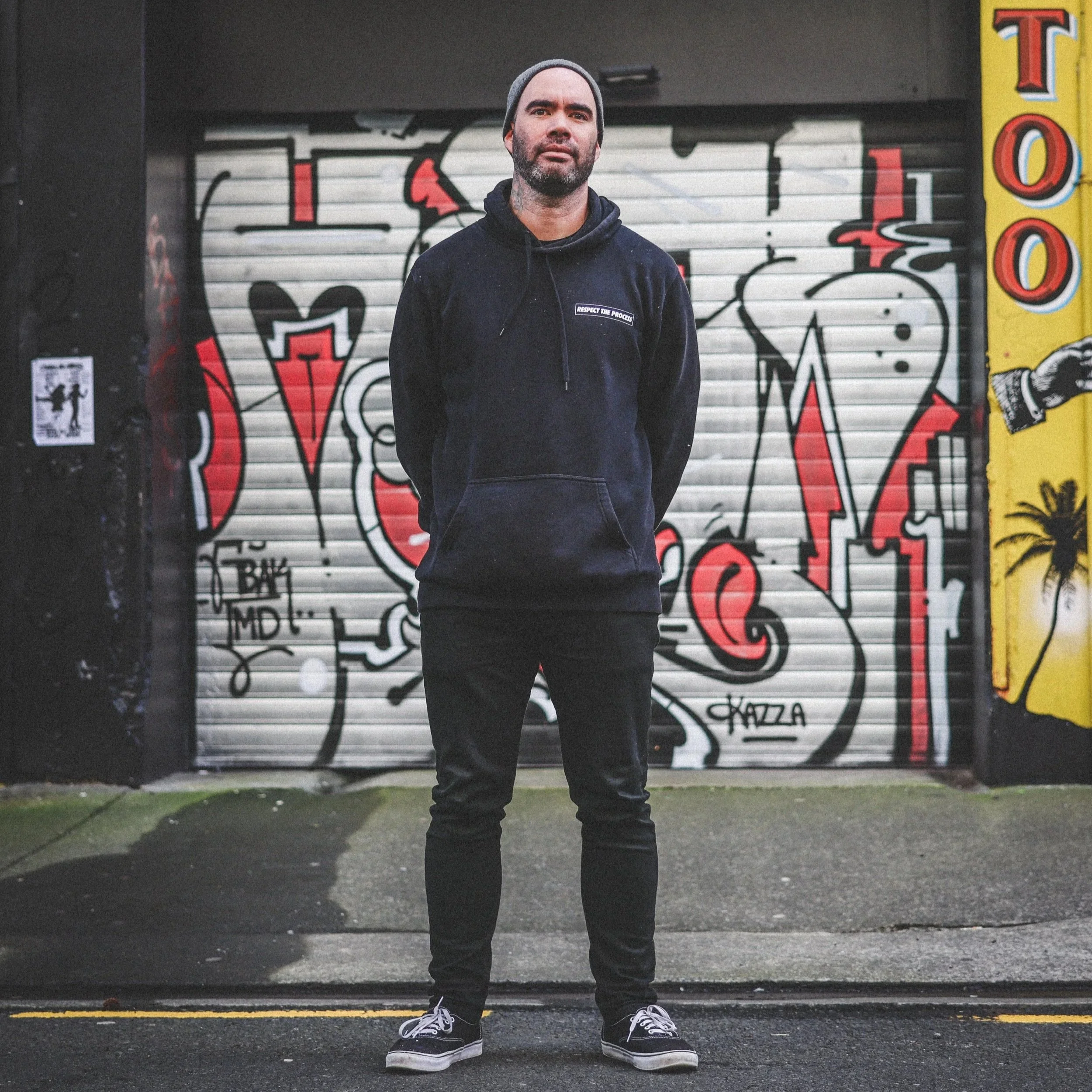
Kairau ‘Haser’ Bradley is a Māori artist of Ngāpuhi descent, born and raised in the western suburbs of Auckland, Aotearoa (New Zealand).
Describe the inspiration behind your kiwi.
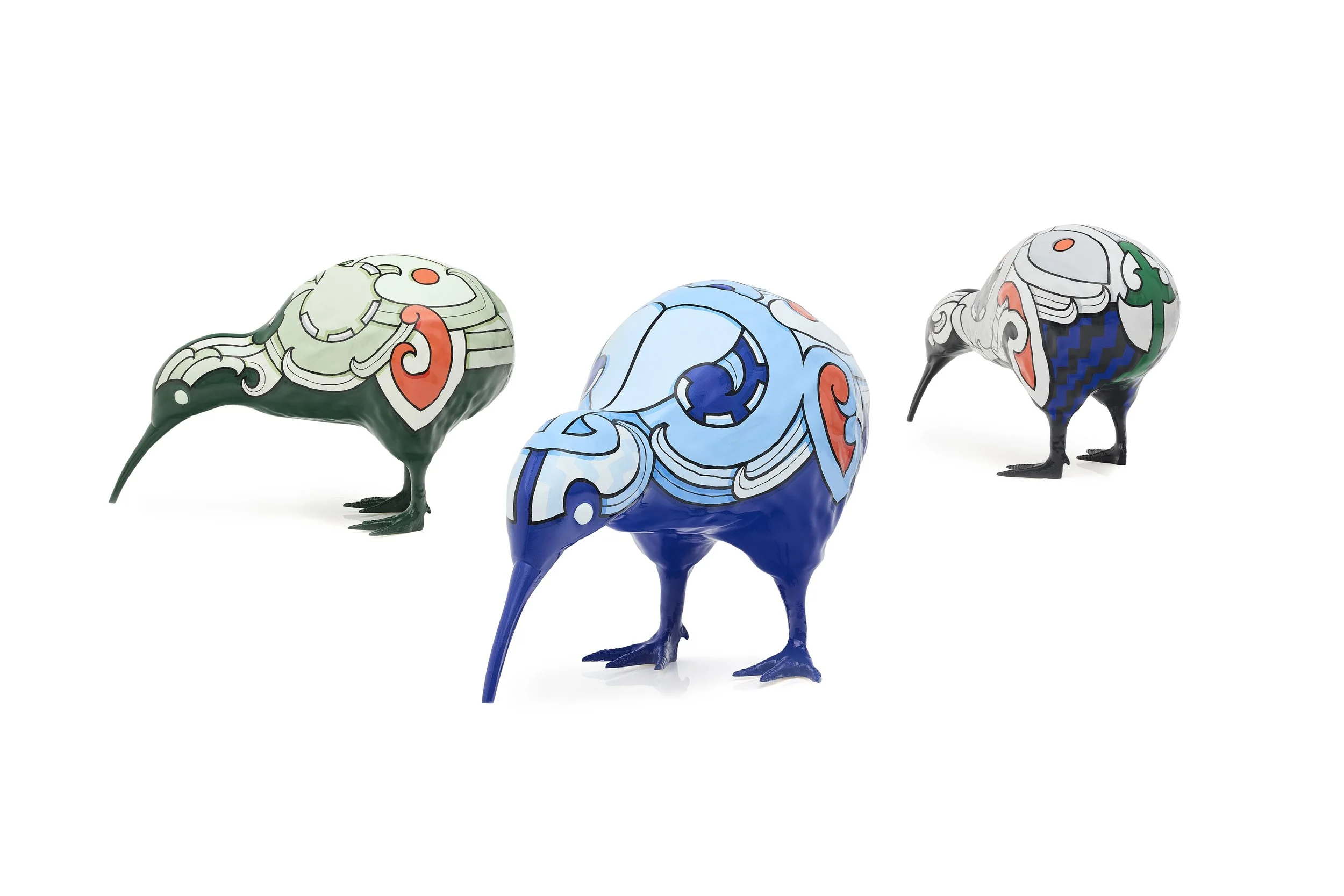
It did take me a while to figure out how I could apply artwork to the kiwi sculptures but also give meaning to the three of them and how I could tie them together. I thought about what would be an easy story to tell that everyone can kind of get their head around and have some level of homage to our kiwi. The story that came out was the story of Ranginui and Papatūānuku and how Tāne-mahuta the god of the forest and birds split them apart. It just made sense to use that story, but also keeping in mind portraying these in a body of work that looks good together.
Describe the design process. How did your idea turn into a kiwi?
It was a challenge and I always accept challenges because I think that's where I begin to grow in my own artistic practice. It encouraged me to look above and beyond a square portrait or a flat surface, and start to think on things on a more rigid surface. But I also like the shape of the kiwi and all the grooves made it quite difficult to get into any sort of flow, but equally you just kind of roll with it. It was fun navigating those diffculties while trying to make sure you have these beautiful products that you hope get to live on for a very long time.
What's your favourite thing about your sculpture? What makes it super cool?
The shape of the kiwi was challenging to paint. I used the shape of the kiwi in a way that the shape of the whetu, the traditional carved face, sits on top of the kiwi. So they're best viewed from a bird's eye view.
Why did you say 'yes' to joining the Kiwi Art Trail?
This is my first time. I've seen the Kiwi Art Trail in the past and I've always wanted to participate. In the last six years, I actually took all of my original works off the market. This art trail will be the first time that I will kind of break that way of working by allowing them to be purchased. When I received the invitation to contribute an artwork, I had to decide if I wanted to pass on this opportunity or if I wanted to allow myself to be part of this project as a way to save kiwi and preserve wildlife.
What do you like about kiwi and kiwi conservation? Why is the kiwi important to you?
Other than the fact that it's a national icon, I think all birds serve a purpose in our ecosysem. And kiwi is already a bird that we don't get to see a lot of because it's nocturnal. But it's not a bird that should just slowly die over time becuase we neglected to do anything about it. Because we don't really see it in the wild, I feel like it will be something that we don't notice if they never turned up again. It's such an awesome creature. I think they're very reflective of our personality in general. They're playful, very cunning, very cheeky birds. And I think that's reflective of the personality of our country. It would be a shame to see us not do anything about this bird that we claim to be the national icon of the country. Even if we got to a point where they were thriving, we should just keep on giving and giving. And we should create more opportunities for them to thrive.
A lot of my kaupapa is around allowing our culture and everything that surrounds our culture, te ao Māori, and everything we consider a necessity for survival to thrive. And a huge part of that is wildlife. We respond so much to birds and nature within out cultural practice.
Have you ever seen a kiwi?
Not in the wild. I've seen them where they have their own little habitats in zoos. I'd love to see them in the wild. There's so many birds I'd love to see in the wild but a kiwi would be one of them.
I think I probably don't even go out of my way to see them like in contain habitats because I don't think that is like where I naturally want to see them. If they were able to thrive in the wild and where we would equally have opportunities to see them, that would be amazing.
Why do you do what you do? What inspired you to become an artist?
A typical answer in which I've been doing art since I was a kid, a lot because my dad was an artist, so it was around me when I was a kid. But the more I say that and the more I hear other people say it, the more I realise that some people just see the world differently.
Art is my language in which I am able to speak to my viewer. I've been able to forge that into a narrative that allows me to speak my story through the avenues of urban art. I discovered graffiti when I was a young adolescent and from there I refined the skill and allowed that urban craft to exist in an urban space. I funnel my stories through the aesthetic of graffiti so it has than visual urban influence.
Find out more about the Te Ao Tūroa triptych on here.